

Director of Professional Development and HLSAC

The Health and Life Sciences (HLS) Advising Center prepares students to pursue majors and careers in various fields across the health care industry.
What can you do with a life sciences degree? Careers in health and life sciences include direct patient care, laboratory work, health care administration, or health education.
HLS supports students in undergraduate programs that are application-based and non-competitive, including:
We also advise current IU Indianapolis students preparing for professional school in health care but are not pursuing degrees through the School of Science. Pre-professional health programs include medicine, dentistry, optometry, physical therapy, physician assistant, occupational therapy, pharmacy, chiropractic, and even veterinary medicine.
No matter your path, the HLS career consultant and advisors will help you plan your schedule, prepare your application, create parallel plans, and develop career goals that align with your personality, interests, and skills. We're here to partner with you. If you're serious about following a career path in the health and life sciences, it's important to plan early and carefully.
As you prepare to transition into the world of work, we'll support you in engaging in purposeful and productive co-curricular activities, such as research, study abroad, service learning, and internships.

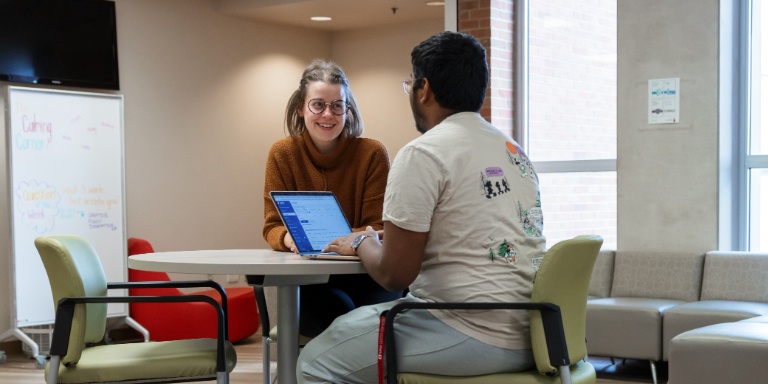
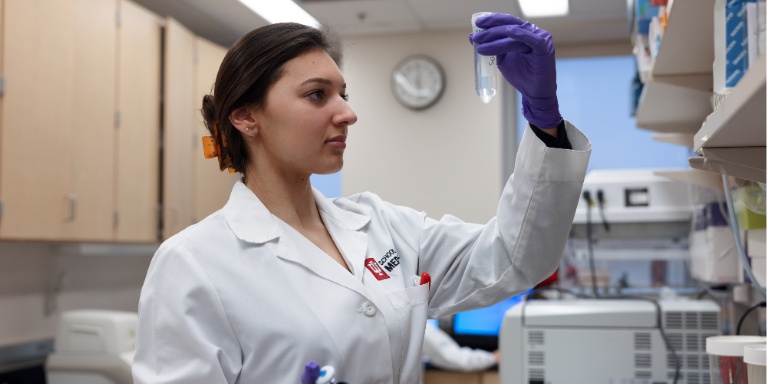
Meet who you’ll be working with on your academic journey.
Director of Professional Development and HLSAC

Student Success Advisor/Team Coordinator, HLS Cluster

Student Success Advisor, HLS Cluster

Student Success Advisor, HLS Cluster

Student Success Advisor, HLS Cluster

Student Success Advisor, HLS Cluster

Student Success Advisor, HLS Cluster

Student Success Advisor, HLS Cluster

Career Consultant, MCE and HLS Clusters

Student Success Advisor, HLS Cluster

Career Consultant, MCE and HLS Clusters
Explore health and life science majors.
Become an integral part of the essential team that treats cancer. You will not only be a part of the caregiver’s team, but a significant part of the patient’s journey. Radiation Therapists are highly skilled and certified to administer ionizing (high energy) radiation via a sophisticated treatment machine called a linear accelerator, to obliterate or control cancer cells and treat other conditions such as keloids and bone marrow transplant preparation. They work alongside Radiation Oncologists (a physician who specializes in the treatment of cancer), Medical Physicists, and Medical Dosimetrists (persons who specialize in treatment planning) as well as Oncology Nurses.
This field is technology-driven with new innovations in treatment machines and techniques constantly being developed. Research allows us to stay abreast of new ways to fight cancer, and hopefully one day find a cure. Dedication is our motivation!
Students pursuing this major will receive hands on knowledge and learning experiences through didactic (classroom) and clinical (on site at hospitals and major cancer centers in Indianapolis and surrounding areas) courses, allowing them to be a part of the team.
Students will learn to communicate effectively, implement their critical- thinking and problem-solving skills in a healthcare environment, as well as learn radiation dose calculations and how to assess treatment plans. They will have the opportunity to team with professional faculty and conduct research that is of interest to them.
Employment of radiation therapists is projected to grow 2% from 2024 to 2034, slower than the average for all occupations.
Despite limited employment growth, about 900 openings for radiation therapists are projected each year, on average, over the decade. Most of those openings are expected to result from the need to replace workers who transfer to different occupations or exit the labor force, such as to retire (Occupational Outlook Handbook, 2025).
According to the IUPUI (now called IU Indianapolis) First Destination Survey in 2024, the average starting salary reported for School of Medicine graduates was $73,457, and the median salary was $72,800.
IU Radiation Therapy program graduates reported an average starting salary of $81,208 and a median starting salary of $74,256.
According to the ASRT Radiologic Wage and Salary Survey in 2024, the average annual wage for radiation therapists was $106,475. The average annual wage in the state of Indiana was $92,833.
The national median annual salary for radiation therapists was $101,990 in 2024 (Occupational Outlook Handbook).
(This section is intended for informational purposes, not prediction of actual salary.)
Radiation therapy majors may pursue advanced degrees in the following areas:
· Medical Dosimetry
· Medical Physics
· Medical school
· Physician Assistant
· Health or Business Administration
*These career options require additional training or education.
Admission by application Information about applying to the Radiation Therapy Program Admission and Interview Tips
Undergraduate research experiences enable you to develop important problem-solving skills and experience for your future career.
Working on campus can provide great preparation for a variety of health-related careers.
Undergraduate research experiences help you develop important problem-solving skills and experience for your future career. Gaining research experience can be particularly helpful if you’re interested in clinical laboratory science or cytotechnology.
Explore the benefits of working on campus! Learn valuable skills and be paid to do it.
Become part of the largest group of imaging professionals out there by learning to use X-rays to diagnose disease. Students in this program receive an associate’s degree, with the option to earn a bachelor’s degree. Students interested in continuing their education can apply during their second year in the Radiography Program.
Radiology is a science involving the medical use of X-rays in the diagnosis of disease. A radiologist is a physician specializing in this science, and a radiographer (or radiologic technologist) produces radiographic images under the direction of the radiologist. Radiographers make up the largest group of imaging professionals.
Their principal duties consist of performing diagnostic X-ray procedures with the lowest amount of radiation exposure possible. They also assist with fluoroscopic examinations, when needed they are a part of the surgical team, and perform mobile exams. Radiographers must be able to handle seriously ill and injured patients to obtain the maximum amount of information without injury to the patient and with the least amount of pain and discomfort from the examination. They may assist the radiologist in some complex procedures, often involving the injection of opaque contrast media through needles or catheters. Radiographers must be well educated and experienced in aseptic techniques, requiring skills comparable to those of nurses in some specialties.
Most technologists are employed in hospitals, clinics, and physicians' offices. For more information visit: https://www.asrt.org/main/career-center/careers-in-radiologic-technology
Overall employment of radiologic technologists are projected to grow 5% from 2024 to 2034, faster than the average for all occupations.
About 15,400 openings for radiologic technologists are projected each year, on average, over the decade. Many of those openings are expected to result from the need to replace workers who transfer to different occupations or exit the labor force, such as to retire (Occupational Outlook Handbook, 2025).
According to the IUPUI (now called IU Indianapolis) First Destination Survey in 2024, the average starting salary reported for School of Medicine graduates was $73,457, and the median salary was $72,800.
IU Radiography program graduates reported an average hourly wage of $31.65/hour and a median hourly wage of $32/hr.
According to the ASRT Radiologic Wage and Salary Survey in 2024, the average annual wage for radiographers was $73,274. The average annual wage in the state of Indiana was $70,630.
The national median annual salary for radiologic technologists was $78,980 in 2024 (Occupational Outlook Handbook).
(This section is intended for informational purposes, not prediction of actual salary.)
Radiography majors often continue their education to complete a bachelor's degree in the following areas:
Once a bachelor's degree is obtained, some graduates continue to advance their careers through a master's degree in fields like health administration.
*This career requires additional training or education.
Admission by application Information about applying to the Radiography Program TEAS Exam information
Undergraduate research experiences enable you to develop important problem-solving skills and experience for your future career.
Working on campus can provide great preparation for a variety of health-related careers.
Undergraduate research experiences help you develop important problem-solving skills and experience for your future career. Gaining research experience can be particularly helpful if you’re interested in clinical laboratory science or cytotechnology.
Explore the benefits of working on campus! Learn valuable skills and be paid to do it.
Students in this program learn to help patients with chronic respiratory diseases breathe more easily. They grow in their ability to think critically, identify certain health conditions, and practice medicine in a compassionate way.
Students pursuing this degree learn to provide emergency care to patients suffering from heart attacks, drowning, or shock. They cultivate many different skills to develop and implement effective care plans, protocols, and disease management programs.
Advanced-level respiratory therapists participate in clinical decision making and patient education, the development and implementation of protocols and treatment plans, health promotion, disease prevention, and disease management.
Employment of respiratory therapists is projected to grow 12% from 2024 to 2034, much faster than the average for all occupations. About 8,800 openings for respiratory therapists are projected each year, on average, over the decade. Many of those openings are expected to result from the need to replace workers who transfer to different occupations or exit the labor force, such as to retire ( Occupational Outlook Handbook, 2025).
Class of 2024 nationwide bachelor's degree graduates in health diagnostic, intervention, and treatment programs (all types) reported the following graduation outcomes to the National Association of Colleges and Employers:
According to the IUPUI (now called IU Indianapolis) First Destination Survey in 2024, the average starting salary reported for School of Medicine graduates was $73,457, and the median salary was $72,800.
Class of 2024 nationwide bachelor's degree graduates in health diagnostic, intervention, and treatment programs (all types) reported a mean starting salary of $65,792 (National Association of Colleges and Employers).
The national median annual salary for respiratory therapists was $80,450 in 2024 ( Occupational Outlook Handbook).
(This section is intended for informational purposes, not prediction of actual salary.)
Respiratory therapy majors often pursue advanced degrees in the following areas:
Admission by application Information about applying to the Respiratory Therapy Program Admission and Interview Tips
Undergraduate research experiences enable you to develop important problem-solving skills and experience for your future career.
Working on campus can provide great preparation for a variety of health-related careers.
Undergraduate research experiences help you develop important problem-solving skills and experience for your future career. Gaining research experience can be particularly helpful if you’re interested in clinical laboratory science or cytotechnology.
Explore the benefits of working on campus! Learn valuable skills and be paid to do it.
View upcoming academic and career events that help put you on the right path to achieving your goals.

Radiography/Nuclear Medicine Tech/Diagnostic Sonography/Medical Imaging Tech- HLS Fall Program Visit
540 Barnhill Dr.
-
IU School of Medicine Health Professions Program- Radiography/Nuclear Medicine Technology/Diagnostic Sonography/Medical Imaging Technology

Dental Hygiene & Dental Assisting- HLS Fall Program Visit
1121 W. Michigan St.
-
IU School of Dentistry- Dental Hygiene & Dental Assisting
Radiography/Nuclear Medicine Tech/Diagnostic Sonography/Medical Imaging Tech- HLS Fall Program Visit
540 Barnhill Dr.
-
IU School of Medicine Health Professions Program- Radiography/Nuclear Medicine Technology/Diagnostic Sonography/Medical Imaging Technology

Radiation Therapy - HLS Fall Program Visit
535 N Barnhill Drive, RT 041 Indianapolis, IN 46202
-
IU School of Medicine Health Professions Program- Radiation Therapy
Radiation Therapy - HLS Fall Program Visit
535 N Barnhill Drive, RT 041 Indianapolis, IN 46202
-
IU School of Medicine Health Professions Program- Radiation Therapy
Not sure if you want to pursue a health and life sciences degree? Explore majors under other specialized support teams in Academic and Career Development.
IU Indianapolis
Health and Life Sciences Advising Center
Taylor Hall, 3004
815 W Michigan St
Indianapolis, IN 46202
Monday: 8 a.m.–5 p.m.
Tuesday: 8 a.m.–5 p.m.
Wednesday: 8 a.m.–5 p.m.
Thursday: 8 a.m.–5 p.m.
Friday: 9 a.m.–4 p.m.
Saturday: Closed
Sunday: Closed